
Share this blog
Most event problems are not caused by bad people.
They’re caused by good people being asked to do the wrong job.
In live events, it is easy to assume that experience automatically translates from one role to another. Someone has worked dozens of shows. They know the industry. They are talented, reliable, and respected. Surely they can step into a different position when needed.
Sometimes they can.
Sometimes they can’t.
And when that happens, it rarely reflects a lack of talent. More often, it reflects a mismatch between the person and the role.
Great Events Are Built on Specialized Skills
One of the reasons the best productions feel different is because everyone knows exactly what they own.
A Stage Manager focuses on timing, cue execution, and keeping the show on schedule.
A Deck Manager focuses on presenters, backstage movement, and making sure speakers are prepared before they step on stage. For example, a skilled Deck Manager brings a unique combination of organization, communication, and presenter support that can have a direct impact on the client experience.
A Technical Director oversees equipment, crew, technical systems, and execution.
A Production Coordinator manages logistics, communication, travel details, schedules, and countless moving parts that keep a show running smoothly.
These roles often work closely together. Their responsibilities may overlap at times, but they are not interchangeable. If you’re unsure where responsibilities begin and end, our Roles and Responsibilities guide breaks down many of the positions commonly found on corporate event productions.
The skills that make someone exceptional in one position are not always the same skills required to succeed in another.
Experience Is Only Part of the Equation
When evaluating freelancers, many people focus first on experience.
How many years have they worked in the industry? What types of events have they supported? Who have they worked for?
Those questions matter.
But experience is only one piece of the puzzle.
The best role assignments also consider communication style, leadership skills, attention to detail, technical expertise, personality, and how someone performs under pressure.
A highly technical professional may thrive behind the scenes but struggle in a client-facing role. A talented coordinator may not enjoy managing a room full of presenters. A strong operator may not have the experience needed to lead an entire department.
None of those situations make someone less capable. They simply highlight the importance of finding the right fit.
The Right Seat Creates Better Results
Think about the strongest teams you’ve worked with.
They probably weren’t filled with people trying to do everyone else’s job.
Instead, they were filled with specialists who understood their responsibilities and trusted others to handle theirs.
The Stage Manager trusted the Technical Director. The Technical Director trusted the A1. The Deck Manager trusted the Stagehands. The Producer trusted the entire team.
That trust creates a rhythm that everyone can feel.
Decisions happen faster. Communication becomes easier. Problems are solved before they become emergencies. Presenters feel supported. Clients feel confident. The entire production benefits.
Why Vetting Matters
At Tempo, vetting is about much more than reviewing a resume.
We want to understand where someone does their best work.
What types of events energize them? What environments bring out their strengths? What roles align with their experience, personality, and skill set?
The goal isn’t simply to fill a position.
The goal is to place the right person in the right seat.
Because the most successful events are not built by finding people who can do a little bit of everything.
They’re built by assembling a team of specialists who can each do their specific job exceptionally well.
The Best Teams Understand the Difference
As event professionals, we all want to grow. We want new opportunities, bigger responsibilities, and new challenges.
That growth is important.
But growth does not happen by assuming every role is the same.
It happens by understanding the unique responsibilities of each position, developing the skills required to succeed, and placing people where they can contribute the most value.
The best events don’t happen because everyone can do everything.
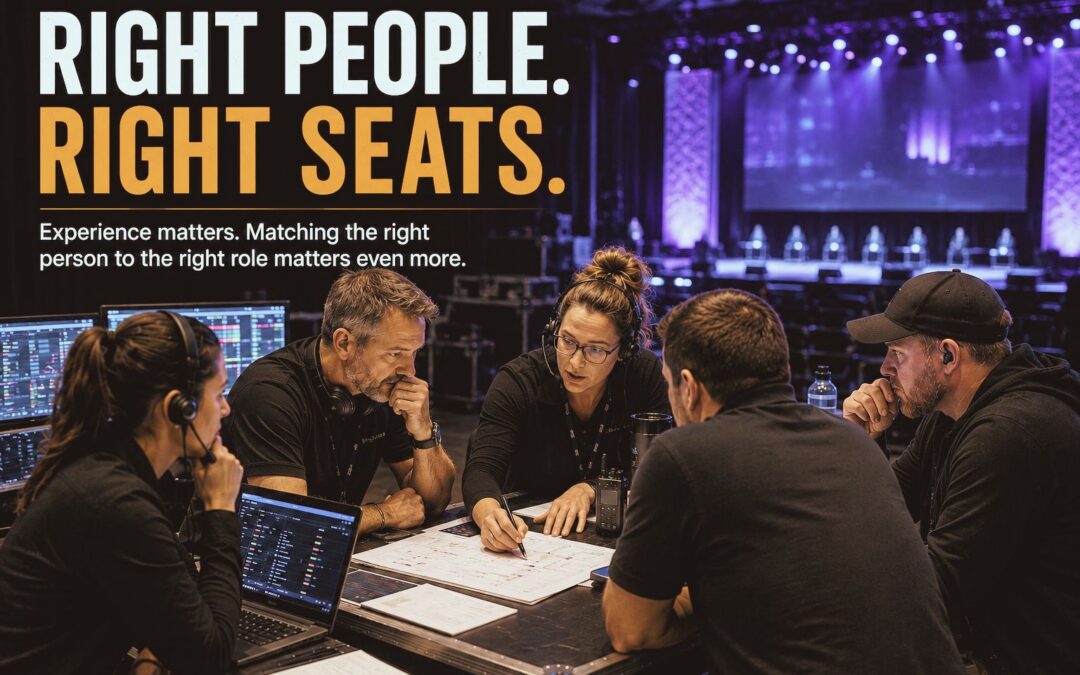
They happen because the right people are sitting in the right seats.