
Share this blog
How to manage shifting scope without losing control
Change is constant in live events. Knowing when it starts to impact the bigger picture is what sets strong teams apart.
In live events, change is expected.
A speaker runs long.
A session gets added.
A room gets repurposed.
No one is surprised by that.
But there is a line between adapting to change and absorbing it.
And that line is not always obvious in the moment.
Last month, we talked about how teams handle change in real time.
This month, we’re looking at when that change starts to impact the plan, the people, and the budget.
Missed it? Read Scope Creep. Now What? here.
Not All Change Is Equal
Some changes are small.
An extra mic.
A timing adjustment.
A quick shift in staging.
Experienced teams handle these without disruption. It is part of the job.
But not all changes are small.
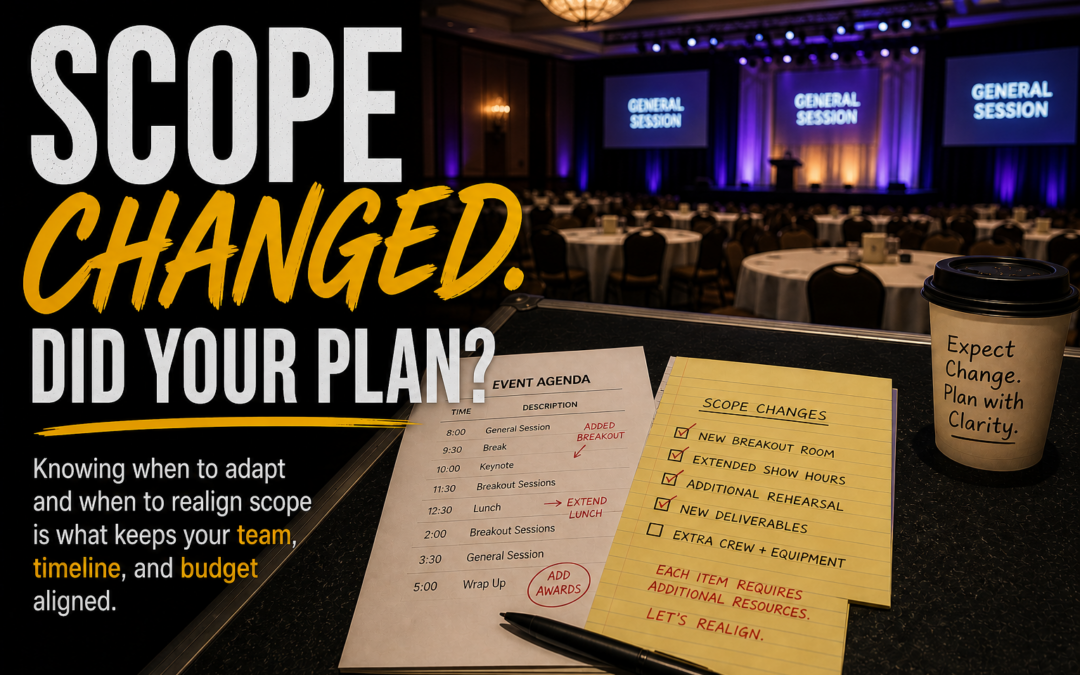
An added breakout room.
Extended show hours.
Additional rehearsals.
New deliverables layered into an already full schedule.
These changes require more time, more people, and more resources.
That is where the conversation needs to shift.
The Gray Area
This is where most shows live.
A team wants to be flexible.
A producer wants to keep things moving.
No one wants to slow the moment down with a budget conversation.
So the team absorbs it.
At first, it feels like good service.
But over time, it creates strain.
Longer days.
Stretched teams.
Unclear expectations.
And eventually, something gives.
When Change Becomes Cost
Change orders are not about being rigid.
They are about understanding what the shift actually requires.
They apply when a change in scope requires additional resources. That might include:
Added labor
Extended hours
Additional rooms or technical setups
Last-minute changes that require more crew or equipment
At that point, the conversation is no longer about flexibility.
It is about making sure the plan matches the ask.
Because when scope expands, resourcing has to expand with it. That is how strong teams keep everything working without overloading the people behind it.
Why This Matters
For clients, this is not just a budget conversation.
It is about maintaining the integrity of the show.
When scope is defined and changes are addressed early:
Teams stay focused
Timelines stay intact
Expectations stay aligned
There are no surprises at the end.
And trust stays strong.
The Best Teams Do Both
Great teams adapt in real time.
They solve problems.
They keep things moving.
They protect the experience.
But they also communicate when a change starts to impact the workload.
They do not wait until the end.
They do not let things build quietly.
They bring visibility to what is changing and what it requires.
Know the Line
There is a difference between being flexible and absorbing cost.
The best partnerships understand that.
They move quickly when things change.
And they stay in sync on what that change actually means.
Because in live events, change is guaranteed.
Knowing when it matters is what keeps everything working.
Finding the right people makes all the difference! Hire a vetted event professional ready to seamlessly support your team whenever and wherever they are needed.